Build digital skeletons, IK/FK controls, and animate characters to the 12 principles of motion.
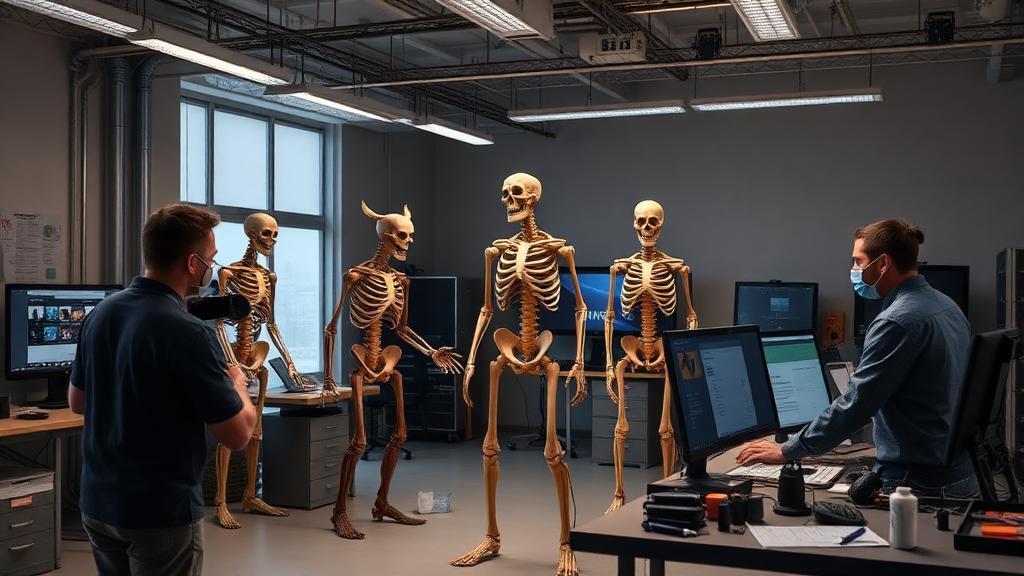
DigiAura's 3D Animation & Rigging course teaches both sides of bringing a digital character to life: the technical engineering of rigging (building the digital skeleton and control system) and the artistic discipline of animation (using those controls to create believable performance). In the rigging phase you will learn skeletal creation for humanoids and creatures, skinning and weight painting for smooth mesh deformation in joint areas, IK/FK control system development, and corrective shapes and blend shapes for facial expressions. In the animation phase you will master the 12 principles of animation, keyframe workflow and graph editor refinement, walk and run cycles, and character acting and pantomime. All training is conducted in Autodesk Maya — the industry-standard software at virtually every professional animation and VFX studio worldwide.
DigiAura's 3D Animation & Rigging course provides both technical rigging and artistic animation training — a dual skill set that most courses teach separately. Understanding both disciplines makes you a more informed animator (knowing what your rig can and cannot do) and a more artist-friendly rigger (knowing what animators need from the control systems you build).
To bring a digital character to life, an artist must first master two interdependent disciplines: Rigging (the technical engineering of the character's movement system) and Animation (the artistic manipulation of that system). This comprehensive course teaches you both sides of this essential process.
Give life to digital creations. This course covers the art of 3D animation and the technical skill of 'rigging'—building the digital skeleton and controls that allow a character or object to move. You'll learn the principles of motion, weight, and performance to create compelling animations.
This program is designed for aspiring Character Animators and Technical Riggers who want a holistic understanding of how motion is achieved in 3D. You will transition from static models to fully articulated, expressive digital characters, learning the technical backbone that enables dynamic performance in film, games, and cinematics.
Rigging is the specialized skill of building the mechanical framework that allows a model to be animated reliably. This section focuses on the engineering of movement:
Once the rig is built, the animation brings the character to life. This section focuses on the artistic principles of performance:
Rigging is the technical process of building the digital skeleton, controls, and deformation systems that allow a 3D model to be animated. Without a rig, a 3D character is a static mesh — with a rig, it becomes a fully articulated puppet that animators can pose and move. Riggers define how a character can bend, stretch, and deform, making their work the bridge between the 3D modeling and animation departments.
You will learn skeletal creation for humanoids and creatures, skinning and weight painting for smooth mesh deformation, IK/FK control system development, blend shape and corrective shape creation for facial expressions, the 12 principles of animation, walk cycle and character performance animation, and camera and scene blocking. The course covers both the technical (rigging) and artistic (animation) sides of character production.
The course is taught using Autodesk Maya, the industry-standard software for 3D rigging and character animation at virtually every major film and game studio worldwide. You will learn Maya's joint and bind skin tools, weight painting with the Paint Skin Weights tool, IK handle and controller setup, and the graph editor for animation curve refinement.
Graduates can pursue careers as Character Animator, Technical Rigger, Character TD (Technical Director), and 3D Animator across film, gaming, and advertising sectors. Rigging is a specialized technical skill that commands premium rates, and experienced riggers are consistently in demand at studios. Character animation roles exist across feature films, episodic TV, game cinematics, and VR experiences.
Both are highly in demand, but they require different strengths. Rigging suits technically minded artists who enjoy problem-solving and engineering — it is a well-paid specialization because riggers with deep Maya scripting knowledge are relatively rare. Animation suits artists with a strong sense of performance, timing, and character psychology. DigiAura's course teaches both so you can identify your natural strengths before choosing a specialization.
