Simulate fire, smoke, water, and destruction using Maya Bifrost and introductory Houdini workflows.
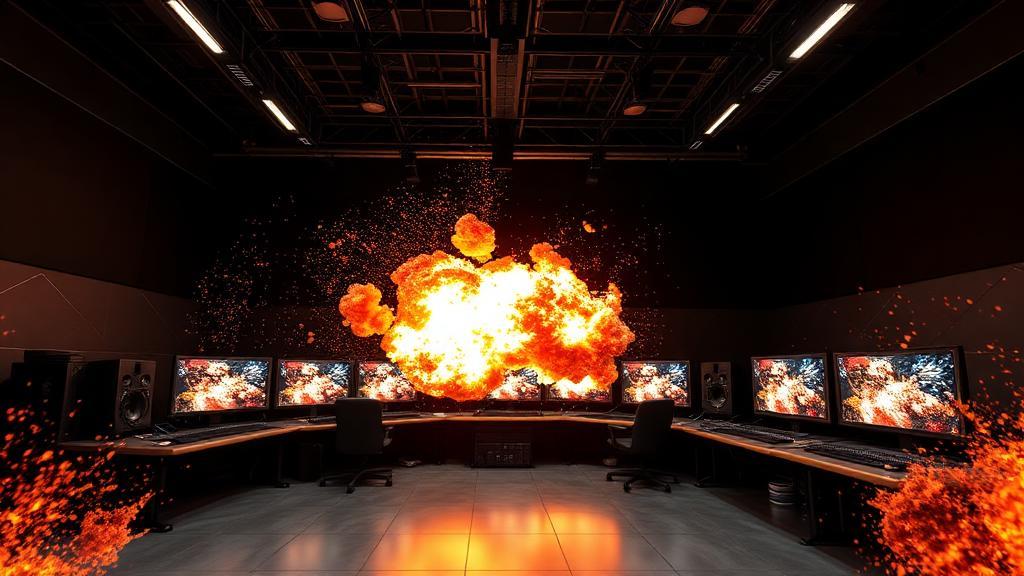
DigiAura's 3DFX Simulation course trains you to create the dynamic, physics-driven effects that make blockbuster VFX sequences believable — fire and combustion, smoke and pyro volumes, water and fluid dynamics, particle systems for sparks and debris, and rigid body destruction simulations. The course uses Maya's Bifrost and nParticles workflow alongside an introduction to Houdini — the industry-dominant procedural FX platform used at DNEG, ILM, Framestore, and Weta FX for film-level simulation work. You will learn how to cache and render your simulations as sequences, output FX elements through Arnold, and deliver render passes formatted for integration in a Nuke compositing pipeline. FX TDs (Technical Directors) are among the most in-demand and highest-paid specialists in the VFX industry, and this course provides the foundational skills to begin that career path.
DigiAura's introduction to Houdini alongside Maya simulation training gives students a realistic preview of the industry-dominant FX tool and the procedural thinking it requires. This dual-software exposure means graduates understand FX as a discipline rather than being locked into a single application's workflow.
In high-end visual effects, 3DFX Simulation is the specialized discipline of creating dynamic, physically-accurate, and procedural effects—anything that moves based on real-world forces. This comprehensive course teaches you to master the tools and theories needed to generate stunning, complex visual events like fire, destruction, water, smoke, and cloth.
Learn to control the elements. This course covers the art and science of Houdini FX (the industry standard) to simulate complex physical phenomena. You'll master tools for creating everything from massive explosions and soft-body destruction to photorealistic fluid dynamics and environmental effects.
This program is designed for aspiring FX Artists and Technical Directors (TDs) who want to specialize in high-impact visual effects for feature films, episodic content, and high-end cinematics. You will transition from static assets to dynamic, procedural systems, learning the technical expertise that drives cinematic realism.
Simulation is the technical art of setting up constraints and forces to drive complex motion. This section focuses on the engineering of dynamic systems using industry-standard tools.
Once the dynamics are set, the artistic application involves shaping volumes, refining motion, and integrating the effects seamlessly. This section focuses on achieving photorealism and cinematic quality.
By mastering both the Procedural Engineering (setting up the forces) and the Artistic Direction (shaping the look and feel), you graduate with the unique, high-demand portfolio required for specialized FX TD roles in major studios.
3D FX (also called FX TD or Dynamics) is the discipline of creating realistic simulations of natural phenomena — fire, smoke, water, explosions, dust, cloth, and destruction — using physics-based simulation software. FX artists use specialized tools to set up, simulate, and render these dynamic effects so that compositors can blend them seamlessly with the live-action footage and other CG elements in the final shot.
The 3DFX Simulation course covers industry-standard simulation tools including Maya's Bifrost and nParticles for fluid, smoke, and particle simulations, and introductory workflows in Houdini — the leading FX software for feature film production. Understanding both Maya-based and Houdini-based approaches prepares you for the diverse software environments you will encounter across different studios.
You will learn to create fire and flame simulations with realistic combustion behaviour, smoke and pyro effects with volume shading, water and fluid dynamics including splash and wave interactions, particle systems for dust, sparks, and debris, and rigid body destruction simulations for breaking objects and environments. You will also cover render setup for FX elements to integrate into a compositing pipeline.
FX artists (FX TDs) are among the highest-paid specialists in the VFX industry because their work requires both artistic sensibility and deep technical knowledge of physics simulation. Entry-level positions exist as Junior FX Artist, with career progression to Senior FX Artist and FX Supervisor. Studios working on action films, disaster sequences, and creature work have particularly high demand for skilled FX artists.
Houdini is the dominant FX software at major feature film studios and is increasingly becoming the industry standard for all procedural VFX work. DigiAura's 3DFX Simulation course provides introductory Houdini workflows so you understand its procedural node-based approach. The foundation built in Maya simulations makes the transition to Houdini significantly easier, and DigiAura offers dedicated Unreal Engine and FX courses for deeper specialization.
