Create photorealistic 3D visualisations of buildings, interiors, and urban environments.
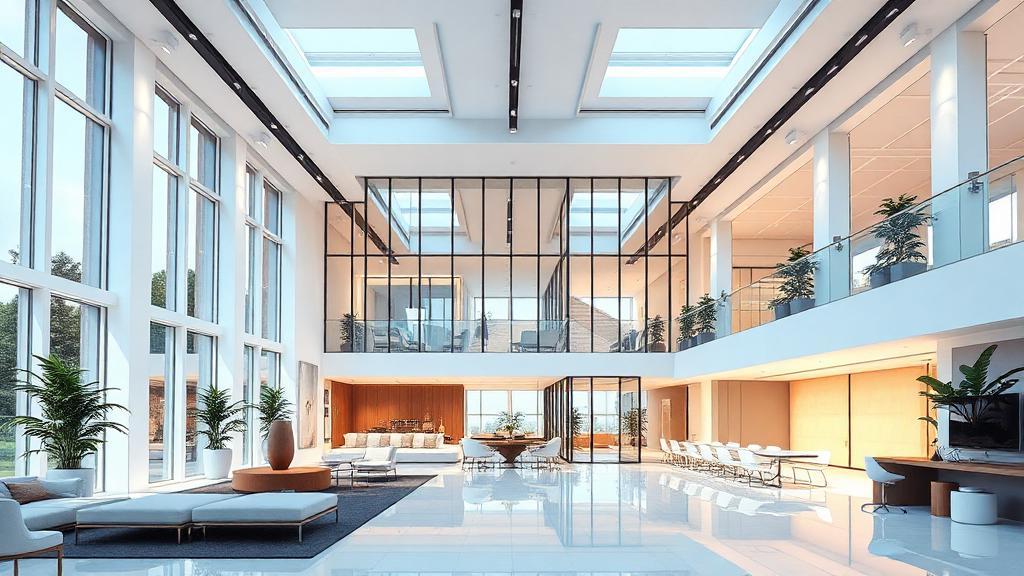
DigiAura's Architectural 3D Modelling course teaches you to create accurate, visually stunning digital representations of buildings, interiors, and urban environments for client presentations, planning applications, and marketing materials. You will learn precision 3D modelling workflows for architectural and interior geometries, UV mapping and the application of realistic building material textures, photorealistic lighting setups using HDRI environments and artificial light sources, rendering for still images and animated walkthroughs, and basic post-processing in Photoshop for final polish. Demand for architectural visualisation specialists is strong from real estate developers, architectural practices, interior design studios, and construction companies across Chennai and the broader Indian market. The 3D skills developed in this course also transfer directly to environment modelling for games and VFX.
DigiAura's architectural modelling training connects 3D skills with practical presentation output — students learn not just to build accurate models but to render and present them in formats that communicate effectively to non-technical clients. This client-communication awareness differentiates DigiAura graduates in a commercial architectural visualisation context.
This module establishes the engineering-level accuracy required for professional ArchViz (Architectural Visualization).
This module focuses on the aesthetic mastery that transforms a rigid model into a tangible, atmospheric space.
You will graduate with a specialized portfolio demonstrating both your technical precision in modeling and your artistic judgment in lighting and texturing. This program equips you with the high-fidelity visualization skills needed to secure roles in the architecture and real estate sectors.
Architectural Modelling is the process of creating accurate, detailed 3D digital models of buildings, interiors, and urban environments for visualization, presentation, and planning purposes. In DigiAura's course, you will learn 3D modelling workflows optimized for architectural visualization, material and lighting setups that mimic real-world building materials, rendering for photorealistic still images and walkthroughs, and how to present architectural designs in compelling, client-ready formats.
The course covers 3D modelling in Autodesk Maya or SketchUp (depending on the specific track), photorealistic rendering using Arnold or V-Ray, material and lighting workflows for architecture, and post-processing in Photoshop. Students interested in real-time architectural visualization will also be introduced to Unreal Engine 5 workflows for interactive 3D walkthroughs.
Architectural Modelling graduates can work as Architectural Visualizer, 3D Visualizer, Interior Design Visualizer, Real Estate Visualization Artist, and Freelance 3D Artist for architectural firms. Demand is strong from real estate developers, architectural practices, interior design studios, and construction companies that use photorealistic 3D visuals for client presentations, marketing materials, and planning approvals.
Yes. The 3D modelling, UV mapping, texturing, and lighting skills developed in Architectural Modelling are directly transferable to environment modelling for games and VFX. Many environment artists in game studios specialize in architectural and urban environments. The attention to scale, material accuracy, and lighting that architectural visualization demands also strengthens general 3D production skills.
No architectural background is required. The course is designed for anyone interested in 3D visualization and digital design, including those from graphic design, photography, interior design, or purely creative backgrounds. Understanding basic design principles and spatial thinking is helpful, but DigiAura's curriculum builds all the technical 3D skills you need from foundational concepts.
