Master cinematography, direction, on-set lighting, and complete your first professional short film.
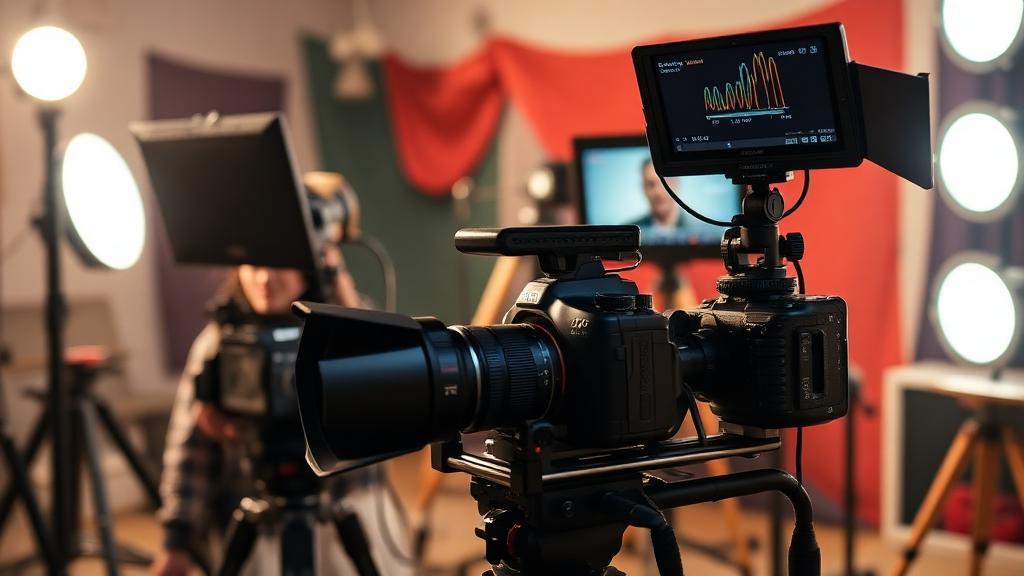
DigiAura's Intermediate Filmmaking course develops the practical craft of professional film production — the technical and creative skills required to move a narrative from script to screen at a professional standard. You will advance your cinematography skills (camera movement, focal length selection, exposure control for dramatic effect), master on-set lighting design for mood and environment, develop directing techniques for authentic actor performance, learn production sound recording and boom fundamentals, and study editing rhythm and narrative pacing through your own footage. The course culminates in the production of a complete short film or series of advanced production exercises that form your filmmaker portfolio and showreel. Understanding filmmaking is also invaluable for VFX artists — VFX supervisors who understand on-set reality communicate more effectively with production and make better informed technical decisions.
DigiAura's filmmaking training bridges the on-set and post-production worlds — students gain insight into how decisions made during filming impact VFX, editing, and the final audience experience. This production-to-post understanding is particularly valuable for students pursuing careers as VFX supervisors or creative directors in the broader entertainment industry.
This curriculum is structured for rapid execution, focusing on the most high-impact skills in each phase.
By completing and finishing your own short film within 30 days, you will graduate with a robust, practical understanding of the entire creative workflow and a strong piece for your professional portfolio.
The Intermediate Filmmaking course builds on basic filmmaking concepts and advances into professional production workflows: advanced cinematography and camera techniques, lighting for dramatic effect and mood, directing actors for authentic performance, sound design and production audio, editing rhythm and narrative pacing, and producing a complete short film as a portfolio project. The course is project-based with a focus on hands-on production experience.
You will develop advanced skills in camera operation (movement, focal length, exposure control), on-set lighting design using three-point lighting and practical lighting techniques, location sound recording and boom operation fundamentals, directing techniques for working with actors and crew, and post-production management including rough cut to picture lock. These skills are applicable to commercial, documentary, and narrative filmmaking.
Understanding filmmaking is invaluable for VFX artists. Knowing how cameras are operated, what lenses do, how lighting is set up on set, and how directors communicate their vision makes you a far more effective VFX collaborator. VFX supervisors who understand production are more valuable because they can advise directors on how to optimize filming for VFX and communicate clearly with both production and post-production departments.
You will produce a complete short film or a series of production exercises demonstrating your mastery of cinematography, lighting, direction, and editing. This material forms the basis of your filmmaker's portfolio and showreel — essential for applying for director, cinematographer, or production roles at studios, production houses, and broadcast companies.
Graduates can pursue roles as Director (short films, commercials, web series), Cinematographer/DOP (Director of Photography), Assistant Director, Production Manager, Video Content Director, and Filmmaker-for-hire for brand videos, corporate films, and events. The course also strengthens your credentials for joining a film school or pursuing advanced studies in cinema.
