2-year postgraduate degree in advanced game programming, AI, graphics systems, and engine architecture.
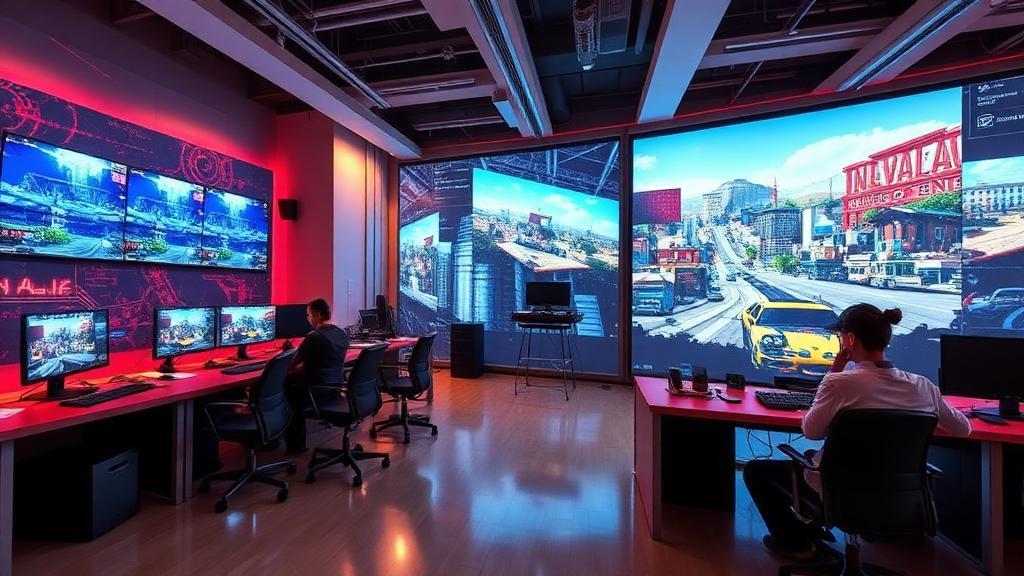
DigiAura's M.Sc. Game Technology is a 2-year university-affiliated postgraduate degree for technical graduates who want to specialise in the engineering core of modern high-performance games. The programme focuses on advanced C++ game programming, complex Game AI algorithm implementation (pathfinding, Behaviour Trees, decision systems), real-time graphics programming and shader development in HLSL/GLSL, physics and collision system design, multiplayer networking fundamentals, and a major technical thesis project requiring original contribution to game technology — such as a custom rendering pipeline, novel AI architecture, or procedural generation system. Graduates are prepared for the most technically demanding and well-compensated roles in the industry: Engine Programmer, AI Programmer, Graphics Programmer, Tools Programmer, and Technical Director positions at AAA studios and advanced interactive technology companies.
DigiAura's M.Sc. Game Technology programme is code-intensive and research-focused by design — distinguishing it from design-oriented game programmes. The compulsory thesis ensures every graduate has demonstrated their ability to solve a genuinely complex technical problem independently, which is the specific capability that senior technical roles at major studios require.
The M.Sc. Game Technology is an intensive two-year postgraduate degree designed to produce expert technical specialists and programmers for the high-end gaming industry. Affiliated with a recognized university, this program moves beyond mere game design, delving deep into the engineering core of modern games.
You will focus on advanced concepts like real-time graphics programming, complex game AI, engine architecture, and network systems. This course is ideal for technical graduates who want to master the code and systems that power high-performance, large-scale interactive digital experiences, positioning them for roles as key technical contributors in AAA or high-end mobile studios.
The curriculum is designed for technical specialization, optimization, and system-level development:
Graduates are prepared for highly specialized, in-demand technical roles within game development:
The M.Sc. Game Technology is a 2-year postgraduate degree focused on technical game programming and engine architecture. It covers advanced C++ and C# game development, Game AI algorithms (pathfinding, Behavior Trees, decision systems), real-time graphics programming and shader development (HLSL/GLSL), physics and networking systems, and a major technical thesis project creating or modifying an advanced game system.
The M.Sc. Game Technology is designed for technical graduates with programming fundamentals who want to specialize in the engineering core of modern games. Ideal candidates have a B.Sc. in Computer Science, B.Sc. Game Development, B.Tech., or equivalent degree with strong programming knowledge. The program is code-intensive and focuses on system-level development rather than creative design.
The B.Sc. Game Design & Development covers both creative game design and foundational programming using visual scripting (Blueprint) alongside C# basics — suitable for students who want to both design and build games. The M.Sc. Game Technology is a postgraduate specialization for programmers who want to go deep into game engine architecture, advanced AI algorithms, graphics programming, and technical systems — targeting roles as Engine Programmers, AI Programmers, and Technical Directors.
Graduates are prepared for highly specialized technical roles including Gameplay Programmer, Engine Programmer, AI Programmer and Systems Engineer, Tools Programmer, Graphics Programmer, Technical Director (TD) Assistant, and R&D roles at game studios and interactive technology companies. These are among the most in-demand and well-compensated technical positions in the gaming industry globally.
The compulsory thesis project requires students to design, implement, and document a significant original technical contribution to game technology — such as a custom rendering module, a novel AI behavior system, a physics optimization solution, or a procedural content generation tool. The thesis is both a demonstration of advanced technical capability and a showcase piece for research and development roles at major studios and technology companies.
