Create photorealistic 3D assets using ZBrush, Maya, Substance Painter, and Arnold renderer.
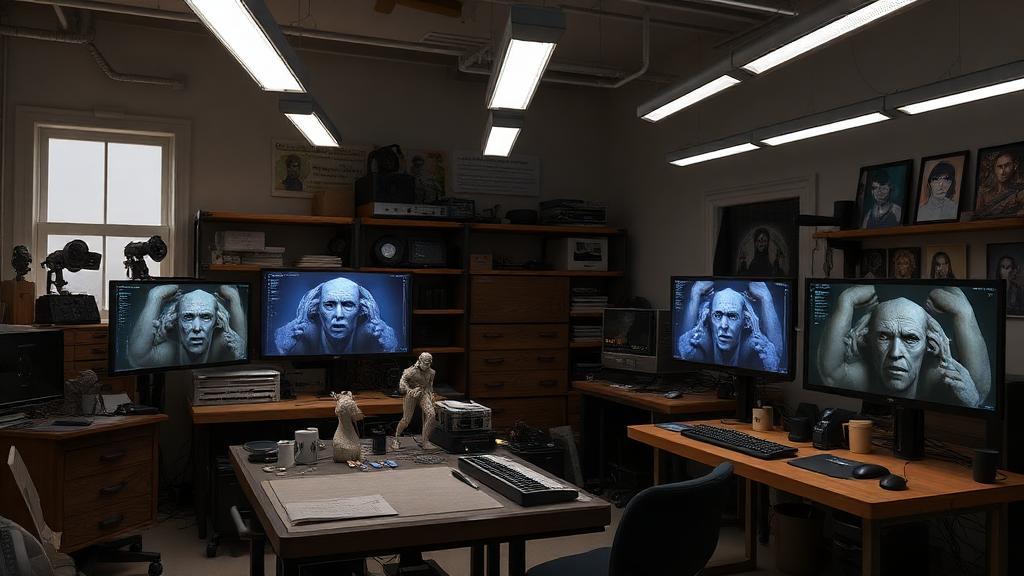
DigiAura's 3D Modeling, Texturing & Lighting course trains you to become a Look Development Artist — the 3D professional responsible for the visual quality and photorealism of every digital asset in a production. You will master high-detail sculpting in ZBrush, production polygon modelling and UV mapping in Maya, Physically Based Rendering (PBR) texture creation in Substance Painter, and cinematic lighting setups using HDRI and three-point techniques rendered through Arnold. The course culminates in the creation of render passes (AOVs) formatted for the compositing pipeline — the professional output format that compositors receive from 3D departments and the critical link between your work and the final shot. Graduates qualify for roles as 3D Modeler, Environment Artist, Character Artist, Texture Artist, and Look Development Artist across film, gaming, and architectural visualisation.
DigiAura's Modeling, Texturing & Lighting course emphasises the production pipeline handoff — specifically creating AOV render outputs that compositors can immediately use. This understanding of how your work integrates downstream in the pipeline makes DigiAura graduates significantly more effective collaborators than artists trained solely on single-discipline tools.
In the 3D industry, the look and feel of an asset is defined by three fundamental, interconnected pillars: Modeling, Texturing, and Lighting. This specialized course is designed to turn you into a Look Development Artist—the professional responsible for ensuring every digital asset is structurally sound, materially accurate, and beautifully lit.
Become a 3D environmental or character artist. This specialized course focuses on the core visual components of 3D. You will learn to sculpt and model high-detail assets, create realistic textures and materials, and set up cinematic lighting that brings your scenes to life.
This program is perfect for aspiring Environmental Artists, Character Modelers, and LookDev Specialists who want to focus on the visual quality and realism of 3D elements. You will gain mastery over the creative and technical workflows required to take a simple concept and render it as a believable, high-fidelity asset ready for film, games, or visualization.
This section establishes the technical foundation for creating any digital asset, focusing on precision, topology, and detail:
This section is dedicated to making your models feel real by adding surface detail, color, and material properties:
This is the final artistic step—using light to elevate your finished assets and set the scene's mood:
This specialized course trains you to become a 3D Look Development Artist — the professional responsible for creating photo-realistic digital assets from concept to render-ready output. You will master high-detail sculpting and production modeling, PBR texturing and material creation using Substance Painter, UV mapping, three-point and HDRI lighting, and render pass output for the compositing pipeline. The course covers all three disciplines needed to define the visual quality of any 3D asset.
Physically Based Rendering (PBR) is the industry-standard approach to texturing in both film and game production. PBR textures include Albedo (base color), Normal (surface detail), Roughness (surface smoothness), and Metallic maps that together define how light physically interacts with the surface. Learning PBR ensures your assets look correct under any lighting condition and in any render engine — essential for professional production work.
The course uses ZBrush for high-detail organic sculpting, Autodesk Maya or Blender for production polygon modeling and UV mapping, Substance Painter for PBR texture creation and material design, and Arnold (or equivalent film renderer) for cinematic lighting and render pass generation. All tools are industry standard for 3D asset production in film, gaming, and visualization.
Graduates can pursue roles as 3D Modeler, Character Artist, Environment Artist, Look Development Artist, Texture Artist, and Lighting Artist. With further specialization, advancement to Lead Artist and Art Director is achievable. These roles exist across film VFX, game development, architectural visualization, product design, and advertising — among the most diverse and in-demand career paths in the creative technology sector.
The course specifically covers render pass output (AOVs including diffuse, specular, ambient occlusion, depth, and shadow passes) that compositors require to integrate your assets into live footage. Understanding how to set up your renders for compositing — rather than just producing a beauty render — makes you a far more effective collaborator in a professional pipeline and significantly improves the quality of the final integrated shot.
