Track live-action performances to drive 3D digital doubles and CG character replacements.
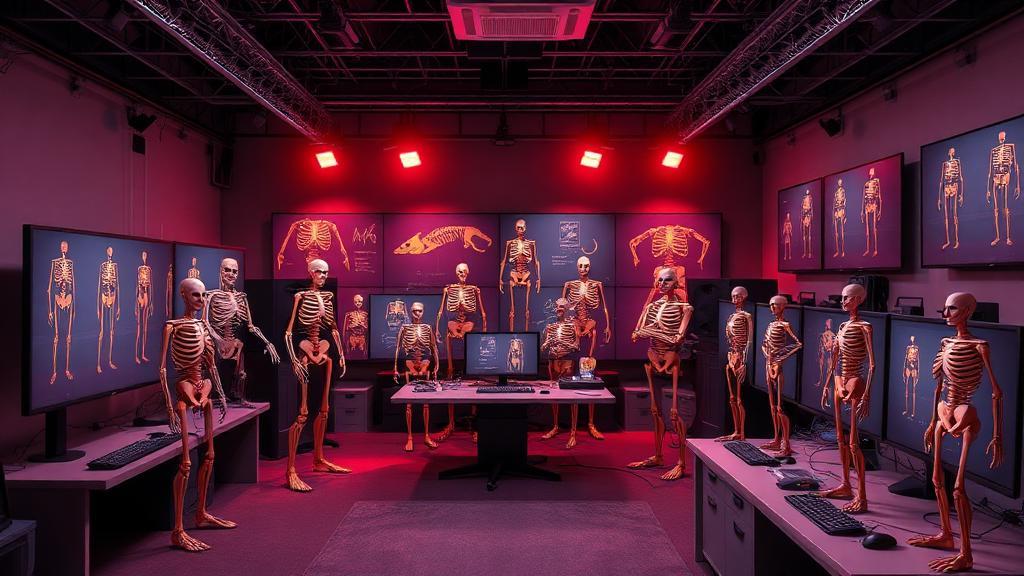
Rotomation — also known as Roto-Animation or Character Matchmove — is the specialised VFX technique of tracking a live-action performer's movements to generate the 3D animation data that drives digital doubles, CG creature replacements, and prop swaps. Without accurate Rotomation, digital characters float or slide, instantly breaking the cinematic illusion. DigiAura's Rotomation course in Chennai teaches you the complete workflow: human and creature anatomy analysis for strategic tracking point placement, joint and point tracking in 3D Equalizer and PFTrack, data export into Maya for rig application, and prop and object integration for CG replacements. This foundational course is the recommended entry point for artists interested in creature effects, character integration, and the technical side of digital performance.
DigiAura's Rotomation training uses real production footage featuring genuine actor performances and complex character movements — not simplified training data. You develop the analytical skills and data accuracy required to contribute to creature and character departments at professional studios.
Rotomation, often called Roto-Animation, is the highly specialized VFX skill that acts as the critical bridge between live-action performance and 3D animated models. It is the process that allows a director to replace a stunt performer with a digital double, or flawlessly integrate a massive CG creature into a scene, ensuring its movements and interactions perfectly match the original plate.
Bridge the gap between live-action and animation. Rotomation (or Roto-Animation) involves tracking the motion of live-action characters or objects to drive 3D animated models. This course will teach you to create precise, realistic animated performances that match live footage, a key skill for creature and character integration.
This foundational course will teach you to meticulously track the movement of live-action characters or objects and translate that motion into accurate 3D animation data. Without precise Rotomation, digital characters would slide or float, instantly breaking the cinematic illusion. You will learn how to analyze a performance, capture its subtle nuances, and export the reliable 3D data needed to drive the next stage of the character integration pipeline.
Rotomation requires a unique blend of 3D tracking expertise and an eye for animation performance. This program focuses on building core skills for realistic character integration:
We ensure you are proficient in the software and methodologies required to succeed in a professional creature/character department:
This Rotomation course provides a powerful, specialized skill set for any artist who loves creatures, characters, and the technical challenge of blending organic motion with 3D animation. It is the perfect foundational step toward our Intermediate and Advanced Rotomation programs.
Rotomation (or Roto-Animation) is the VFX technique of tracking the movement of a live-action performer or object and using that data to drive a 3D animated character or digital double. It is the process that enables directors to replace stunt performers with digital characters, integrate CG creatures into scenes, or swap physical props with detailed digital versions — all while perfectly matching the original filmed movement.
You will learn human and creature anatomy analysis for tracking, point and joint tracking on actor bodies, the complete Rotomation workflow from footage analysis to Maya data export, prop and object integration for CG replacement, and how to evaluate the quality of your motion data. You will use 3D Equalizer, PFTrack, and Maya to capture and apply motion data to digital rigs.
Matchmove tracks the camera movement in a scene. Rotomation tracks the movement of subjects within the scene — actors, creatures, props. Where a Matchmove artist asks 'How did the camera move?', a Rotomation artist asks 'How did this performer's arm, shoulder, or face move?' Both skills are often used together for complete CG character integration shots.
Rotomation artists are employed in the creature and character departments of VFX studios. Entry-level artists work as Junior Rotomation Artists, contributing to digital double and creature integration shots. With experience, advancement to Rotomation Lead and eventually Rotomation Supervisor is achievable. Studios working on creature-heavy films and streaming series have constant demand for skilled Rotomation specialists.
Yes, the Basic Rotomation course is designed to be accessible to beginners, though some familiarity with VFX concepts is helpful. A basic understanding of 3D space and human anatomy will accelerate your learning. DigiAura's program starts from foundational principles and progressively builds your tracking and data analysis skills through practical exercises on real footage.
