Learn ICVFX, real-time LED volume workflows, and Unreal Engine 5 virtual production on set.
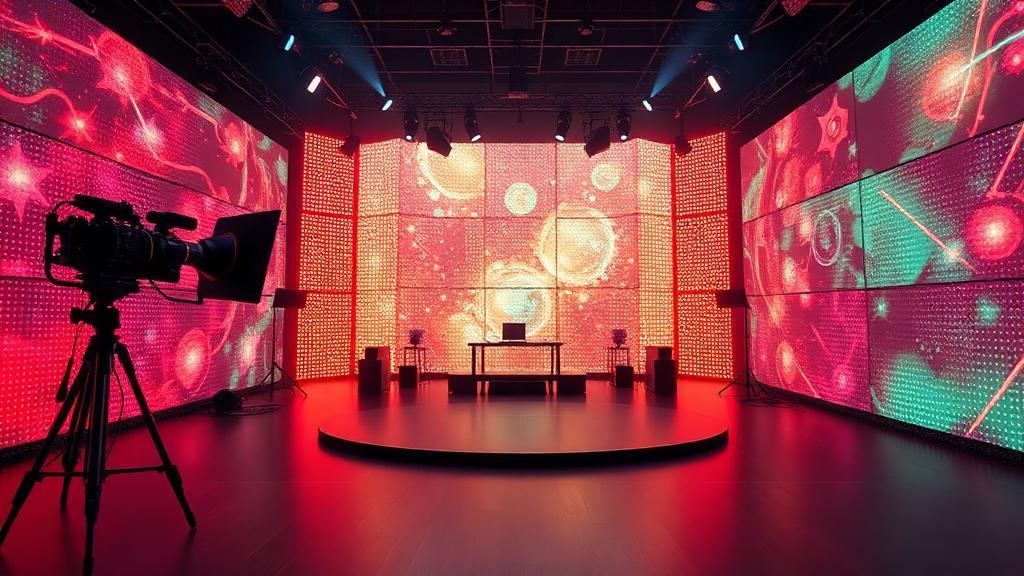
Virtual Production is redefining how films and television series are made. Using Unreal Engine 5's real-time rendering capabilities on LED volume stages, directors can film actors in front of photorealistic digital environments without a single green screen frame or traditional post-production background replacement. DigiAura's Virtual Production course teaches you to build and light cinematic real-time environments in UE5 using Lumen global illumination and Nanite geometry, calibrate live camera tracking for mathematical accuracy, operate the Composure compositing framework for real-time integration, conduct virtual scouting and pre-visualisation, and understand the complete in-camera VFX (ICVFX) workflow used on major productions including The Mandalorian, 1899, and multiple Netflix originals. This is the most forward-looking technical VFX skill set in the industry today.
DigiAura's Virtual Production course is designed for the production environment as it exists today — where Unreal Engine proficiency is increasingly expected not just from game developers but from VFX artists, cinematographers, and production designers. Graduates with UE5 virtual production skills are positioned for roles at the frontier of the film and television industry.
Virtual Production (VP) is revolutionizing the film, television, and media industries by integrating game engine technology directly into the filmmaking process. This cutting-edge course is your pathway to becoming a specialist in this in-demand field, blending traditional VFX workflows with the power of real-time rendering.
Step into the future of filmmaking. This cutting-edge course explores Virtual Production and in-camera VFX using Unreal Engine. You will learn how to create real-time environments, integrate live-action footage, and work with the technology that is revolutionizing movie and television production.
This program is designed for artists and filmmakers eager to work on the frontier of cinematic technology. You will gain mastery over Unreal Engine (UE), not just as a game engine, but as a powerful real-time compositing and visualization tool. The focus is on in-camera VFX—creating final pixels live on set using LED walls—and utilizing the engine for pre-visualization and complex environment generation.
This section focuses on designing and optimizing digital sets for real-time performance within Unreal Engine:
This section focuses on the technical integration of live elements with the digital environment:
This cutting-edge course provides the specialized technical knowledge and artistic skill set needed for the next generation of film and media production.
Virtual Production is a filmmaking approach that uses game engine technology — primarily Unreal Engine — to create real-time digital environments that are displayed on large LED walls on set. Actors perform in front of these LED walls, and the camera captures both the physical foreground and the digital background simultaneously in-camera, reducing or eliminating the need for traditional post-production green screen compositing. Major studios including Netflix, Disney, and Warner Bros now use VP workflows extensively.
You will learn real-time world building and environment creation in Unreal Engine 5, cinematic lighting using Lumen global illumination, asset optimization with Nanite for high-fidelity real-time rendering, camera tracking and calibration for live integration, Composure-based real-time compositing within UE5, virtual scouting and pre-visualization workflows, and the in-camera VFX (ICVFX) pipeline for LED wall production.
Virtual Production training opens roles including VP Technical Artist, Real-Time Environment Artist, Unreal Engine Operator (on-set), LED Volume Technician, Pre-visualization Artist, and Virtual Art Department (VAD) Artist. These roles are at the frontier of the film industry and command premium salaries due to the specialized combination of game engine expertise and production knowledge they require.
No prior Unreal Engine experience is required, though basic 3D concepts and computer literacy are helpful. The course begins with Unreal Engine fundamentals before advancing to Virtual Production-specific workflows. Students with prior 3D modeling or game development experience will progress more quickly, but DigiAura's curriculum is designed to accommodate learners from diverse backgrounds.
Traditional green screen compositing removes the green background in post-production and replaces it digitally. In-camera VFX (ICVFX) displays the digital background on an LED wall in real-time during filming. The camera captures both foreground and background together, with real lighting and reflections from the LED wall falling on the actors and props — creating a fundamentally more realistic and efficient result without lengthy post-production keying.
